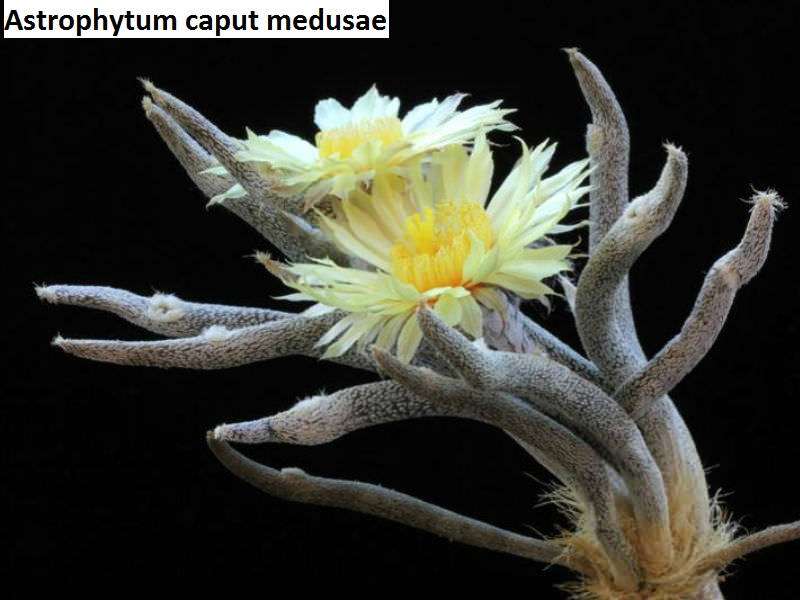
Common names Abaza, Medusita. Synonyms Digitostigma caput-medusae Origin and Habitat Native to the state of Nuevo Leon in Mexico USDA Hardiness Zone Zones: 9a to 11b Maximum size Height: 2,5-6cm / Spread: 5-15cm Care Tips Expected germination rate 50% Growth Rate Slow Maintenance Easy Sun Exposure Moderate shade at first, full sun later Watering Low Soil type and pH Well-draining, acidic to neutral pH (5.5 – 6.5) Astrophytum caput-medusae is a species of cactus native to the state of Nuevo Leon in Mexico. It grows at an altitude of 100-200 meters, in the shade of rocks and other bushes. This cactus differs from the conventional star-shape phenotype characteristic to other members of the genus. It’s reported to grow wild only in a single location. It is characterised by several cylindrical, narrow stems with cylindrical or triangular tubercles, several white lumps and some white hair. Spines may be 0 to 4, usually persisting in old tubercles. They are of 1 to 3 mm in length, and are rigid, semi-erect with a whitish base and dark-coffee apex. You should protect yourself from these spines while handling the plant. During fall, Astrophytum caput-medusae produces striking yellow flowers with orange perianth sections. Fruit is generally green and fleshy with black, cup-like seeds up to 3 mm long. Reportedly it can be propagated by seed, tissue culture as well as grafting. Grafting is usually not needed. Also, grafted plants are very drought-sensitive, probably since the root (a major water-storing organ) is absent. On the contrary, plants on their own roots are stronger and more stable. This species is considered critically endangered due to its limited growth range, over collection by collectors and destruction by livestock. The genus name is derived from two Greek words – Aster meaning star and phytum meaning plant, whereas the species name caput-medusae is also derived from Greek word, with caput meaning head and Medusa is the mythological woman with her blonde hair turning to snakes and her stair turning objects to stone, and who was beheaded by Perseus. Thus caput-medusae means Medusa’s head. Astrophytum caput-medusae needs plenty of sunlight. Thus, you should keep it under at least 6 hours of direct sunlight every day. But you should also avoid direct sunlight during the hottest period of the day. You should keep it in warm temperatures over 21-degree C, although it can also withstand colder temperatures, but not below 4-degree C. However, if your plant is outdoors, you should move it indoors in winters if the weather is too cold. You should water Astrophytum caput-medusae once a month during its growing season, i.e., spring and summer. However, if you live in extremely hot climate, this watering frequency may have to be increased. You can water even weekly during the vegetative period, ensuring the soil is completely dry between waterings. Avoid overwatering as it can cause root rot. Soak and dry method is the best. i.e., first water thoroughly so the soil becomes soaked and then allow it to dry completely before the next watering. This plant is winter dormant. Hence you should water it less often during winter. You should also make sure the atmosphere around your plant is not too humid. Fertilize your Astorphytum caput-medusae regularly during its growing season. Use a fertilizer with a good balance of all nutrients. Make sure you dilute the food with some water as it can otherwise be too strong for this plant. Do not fertilize during the winter. Although pests and diseases rarely occur in Astrophytum caput-medusae, sometimes they may happen. These include aphids, mealybugs, red spiders, scales and scabs. Too much watering can cause root rot too. If you observe these pests, get rid of them as soon as possible with a store-bought solution or a little rubbing alcohol. SHIPPING: Shipped out within 5 working days. Unregistered letter (NO TRACKING). For more about delivery times click here: HOW TO ORDER! SOWING INSTRUCTIONS: click HERE!
Brand
SterStyle
Related products
-50%