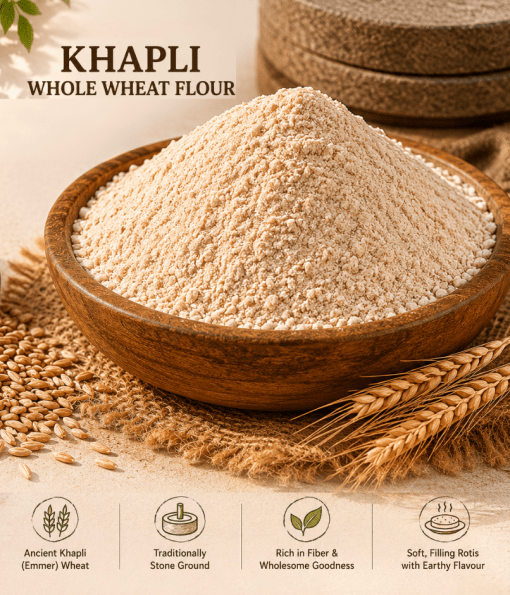
Swadesi Way’s Kapli Whole Wheat Atta is made from ancient Khapli (Emmer) wheat and slowly stone ground in small batches to retain its natural nutrition, fiber, and earthy flavour. Khapli (Emmer) wheat, one of India’s traditional wheat varieties that has been cultivated for generations and is known for its nutty flavor. It is valued for its rich taste, better digestibility, and naturally lower gluten structure compared to modern wheat. Farm to Plate Journey This Khapli wheat is grown by farmers supported by Gramya Ventures, which works to strengthen farmer livelihoods while preserving traditional crop varieties. The process is simple: Indigenous Khapli wheat selected for local growing conditions Cultivated using bio-resource-based farming practices Supported through farmer training and guidance Cleaned, graded, and sorted at village-level units Slowly stone-ground in small batches No polishing. No unnecessary processing. Just traditionally grown wheat milled with care. Storage Tips Store in an airtight container Keep in a cool, dry place Keep away from direct sunlight and moisture Best before: 3 months What to Expect Khapli flour absorbs more water than regular wheat flour due to its naturally high fibre content. The dough may feel softer and benefits from a little extra resting time before rolling. This helps create softer rotis and brings out the grain’s natural texture and flavour. Packaging Note Our eco-friendly packaging is moisture-sensitive. Please transfer the atta to an airtight container soon after receiving it to maintain freshness and quality. Place of Origin Ratapani Farmers Collective (supported by Gramya)Raisen district, Madhya Pradesh Around 150 farmers in the region are growing indigenous Khapli wheat using bio-resource-based farming practices rooted in local ecological knowledge. About Gramya Gramya Ventures is working to rebuild climate-resilient and traceable Indian food systems by supporting indigenous crops, decentralized rural processing, and farmer-led value chains. The organisation works directly with farmer groups and village-level entrepreneurs to revive traditional grains like Khapli wheat and millets that are naturally suited to dryland farming, require lower external inputs, and support biodiversity and soil health. Their work today supports: 1,500 farmers directly 32 village-level entrepreneurs 350 FPO/cooperative members 2,200 women beneficiaries Thousands of rural households through decentralized food systems Gramya also supports farmers with indigenous seeds, agronomy guidance, bio-resource centres, village-level processing infrastructure, and buy-back assurance helping improve farmer income while strengthening climate-resilient agriculture.
Brand
SterStyle
Related products
-50%